Explore More Foldable Table Guides
What Makes HDPE the Best Material for a Foldable Table in Kenya?
High-density polyethylene (HDPE) is a food-grade, heavy-duty plastic used in cutting boards, industrial containers and outdoor furniture worldwide. On a foldable table, an HDPE top gives you a surface that does not absorb water, does not warp in Kenya's humid climate, and wipes clean with a damp cloth after any event. Unlike plywood or MDF laminate tops, HDPE will not delaminate, swell or rot when exposed to rain, spilled drinks or outdoor conditions. It is also heat-resistant enough to safely handle hot serving dishes placed directly on the surface — a critical requirement for catering and buffet events across Nairobi.
Plastic Foldable Tables vs. Wooden Foldable Tables — Which Is Better for Kenya?
Wooden foldable tables look attractive at first but come with serious drawbacks in Kenya's climate. The laminate surface peels after prolonged moisture exposure, the MDF core swells and warps when used outdoors, and wooden tables weigh 30–50% more than comparable plastic tables. Our plastic (HDPE) foldable tables are lighter, easier to carry, simpler to clean, more weather-resistant and longer-lasting under real Kenyan conditions — at a lower price. For event hire businesses and caterers, the lower weight and wipe-clean surface translate directly into faster setup, lower labour costs and higher hygiene standards at every event.
Heavy Duty Construction — Built for Commercial Use Across Kenya
Every plastic foldable table we stock uses a powder-coated steel tube frame — not aluminium or thin lightweight steel. The frame is rated for 80 kg (1.2m table), 100 kg (1.5m table) or 120 kg (1.8m table) of evenly distributed load. Locking leg rings snap each leg securely open, eliminating wobble and preventing accidental collapse. Non-slip rubber feet protect floors and stabilise the table on grass, concrete, tiles and soil. These are not occasional-use household items — they are the same tables used daily by Nairobi's busiest event companies, churches, hotels, schools and government offices.
What Are Plastic Foldable Tables Used for in Kenya?
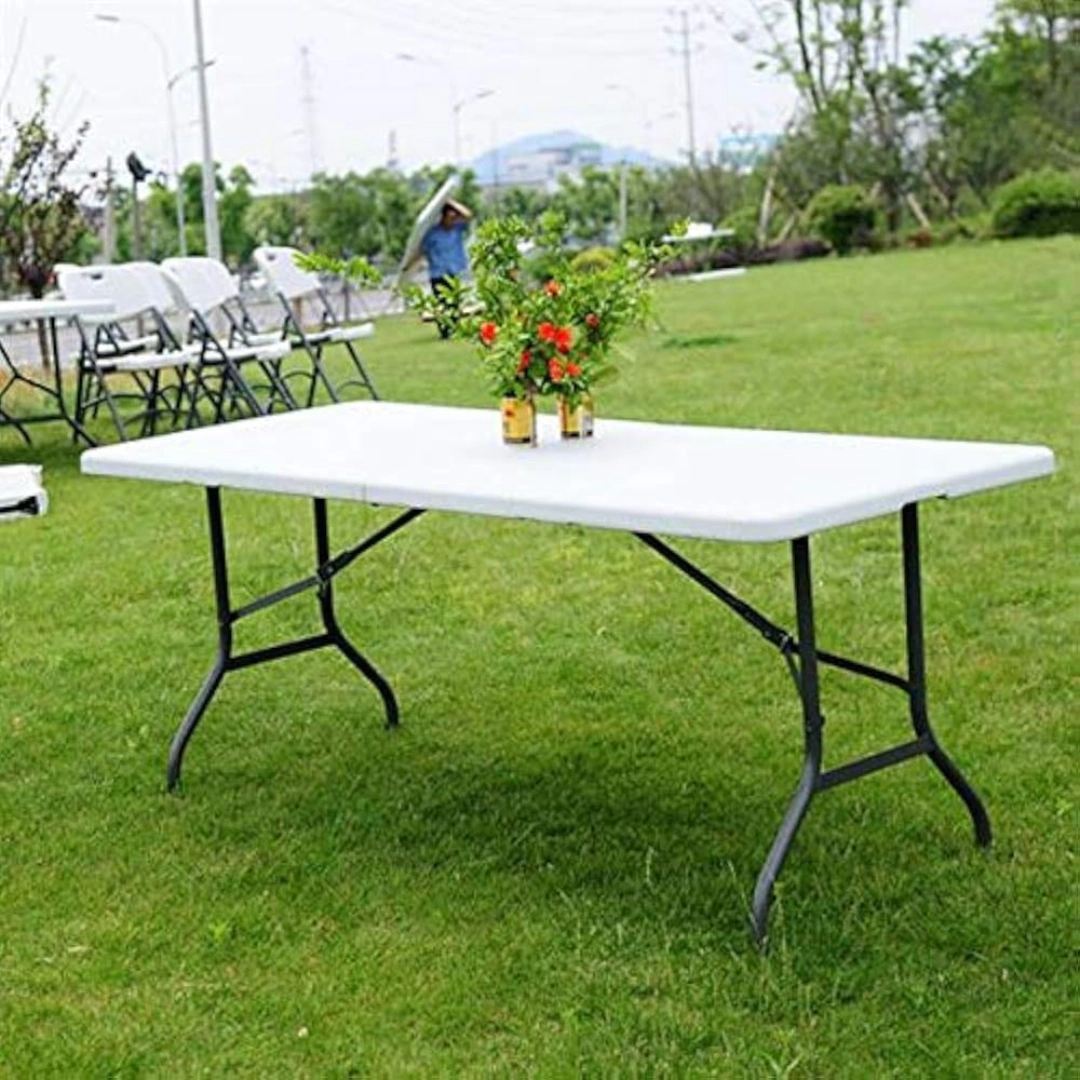
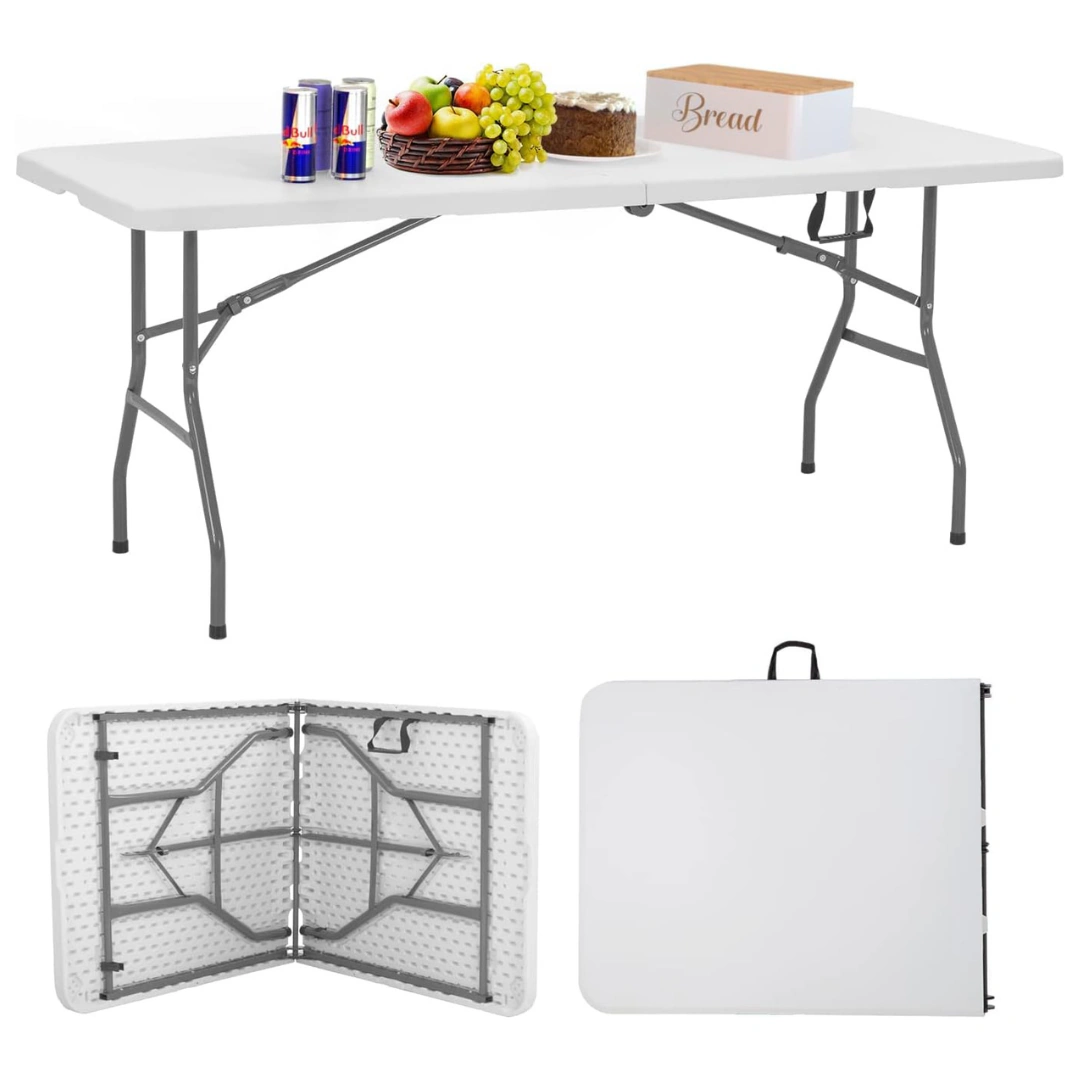
Plastic foldable tables serve an enormous range of purposes across Kenya: wedding receptions and head tables, church services and harambee fundraisers, corporate conferences and boardroom meetings, school exams and university registration desks, hotel banquet halls and lodges, outdoor markets and trade exhibitions, catering buffet stations and food service, NGO field offices and community events, garden and birthday parties, and work-from-home desks in Nairobi apartments. The ability to fold flat, stack 10 or more tables in a compact space, and set each one up in under 8 seconds makes them the default choice for any setting that needs flexible, movable surface space.
How to Choose the Right Size Plastic Foldable Table in Kenya
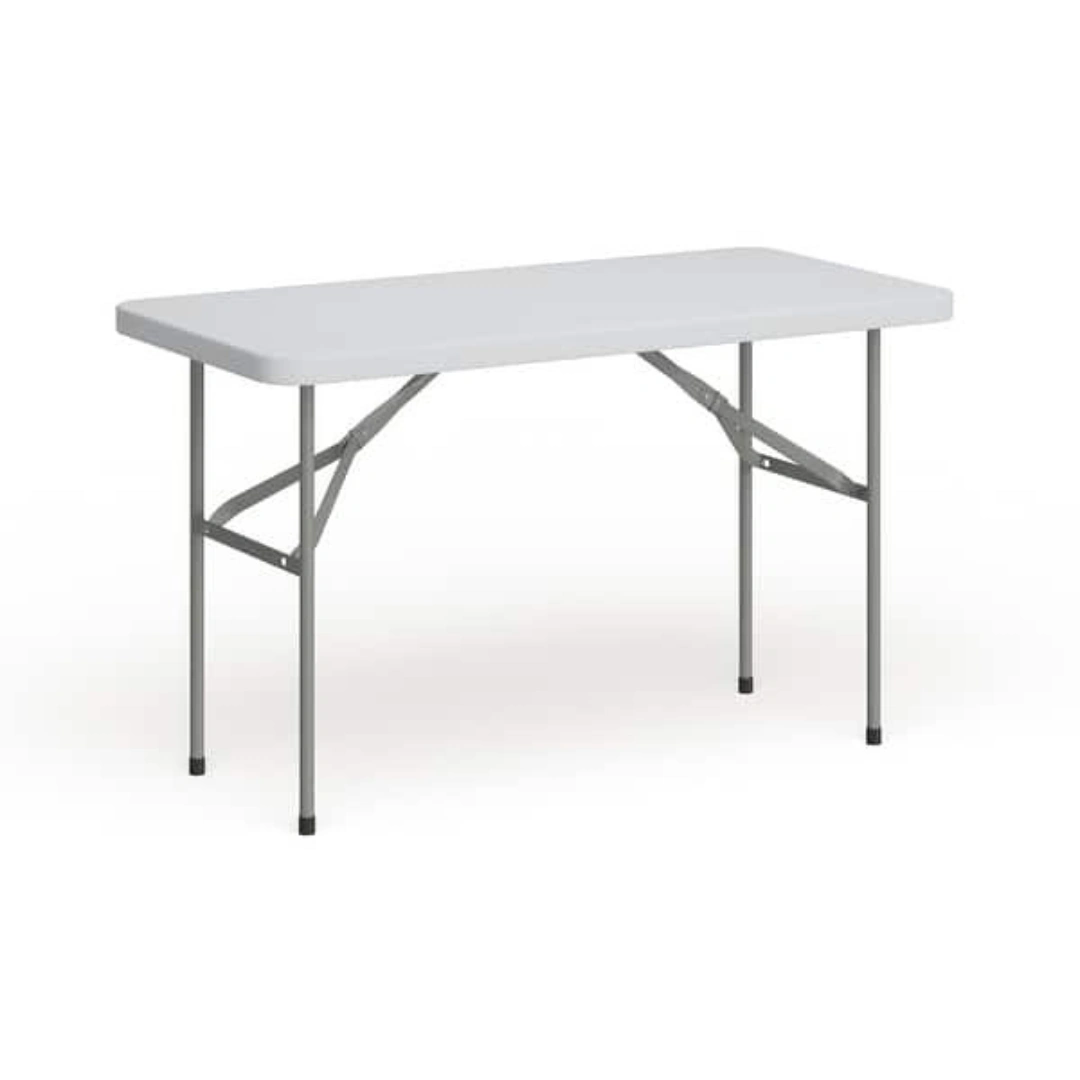
The 1.2m (4ft) plastic foldable table at Ksh 7,899 is the best choice for home dining, small apartments, picnics, garden parties and market stalls — it seats 4–6 people and weighs just 7 kg, light enough for one person to carry solo. The 1.5m (5ft) at Ksh 8,999 is Kenya's most popular size for weddings and events, seating 6–8 guests with a 100 kg capacity and a professional appearance that suits both indoor and outdoor venues. The 1.8m (6ft) at Ksh 9,950 is the heavy-duty banquet and conference table, seating 8–10 guests and supporting 120 kg for the most demanding commercial and catering use. All three fold completely flat and require zero assembly — simply unfold and lock the legs.
How Long Does a Plastic Folding Table Last?
With normal care, a quality HDPE folding table lasts many years of regular use. The parts that wear first are the moving ones: the hinge in the middle, the leg locks and the foot caps. Fold and unfold the table with the leg locks fully released rather than forcing it, keep the hinges dry, and replace lost foot caps so the steel legs do not wear down. The top itself rarely fails; the most common damage is cracking from someone standing on the table or from dropping it on a corner when carrying it. Hire businesses that follow these habits keep the same tables in service season after season.